Vṛtrāsura’s Stuti: The Path of Pure Devotion and Surrender

Among the many devotional prayers in the Bhagavata tradition, those of Vṛtrāsura occupy a unique and exalted position. Although Vṛtrāsura appears outwardly as a mighty demon fighting on the battlefield, inwardly he is revealed to be an extraordinary devotee whose heart is completely absorbed in the Supreme Lord. Standing at the threshold of death, he does not pray for victory, power, heavenly pleasures, or even liberation. Instead, his prayers express the purest form of devotion—selfless love for God.
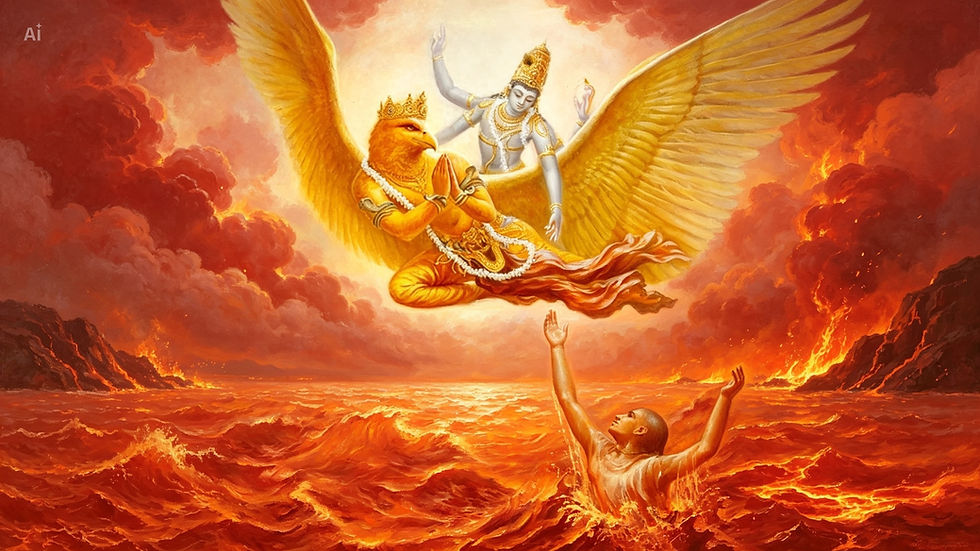
Verses 24–27 of Vṛtrāsura's stuti represent the culmination of his spiritual realisation. In these verses, he prays to become the servant of the Lord's devotees, rejects all material and spiritual rewards that separate him from the Lord, longs intensely for divine vision, and seeks the association of devotees while remaining free from worldly attachment.
These prayers reveal the highest ideals of Bhakti Yoga: humility, surrender, divine longing, detachment, and loving devotion. Vṛtrāsura teaches that the ultimate goal of spiritual life is not heavenly enjoyment, mystical powers, or even liberation from rebirth, but an unbroken relationship with the Supreme Lord.

Through these moving verses, the Bhagavata presents a profound spiritual truth: true devotion arises when the heart seeks nothing except God Himself. Thus, Vṛtrāsura, though born among the asuras, stands as one of the greatest examples of pure devotion in the entire Bhagavata tradition.
Vṛtrāsura’s Stuti: The Path of Pure Devotion and Surrender
Discover the depth of Vṛtrāsura’s Stuti: The Path of Pure Devotion and Surrender. Explore how Vṛtrāsura’s Stuti embodies true bhakti.
अहं हरे तव पादैकमूल-दासानुदासो भवितास्मि भूयः ।मनः स्मरेतासुपतेर्गुणांस्तेगृणीत वाक् कर्म करोतु कायः ॥ २४ ॥
ahaṁ hare tava pādaika-mūla- dāsānudāso bhavitāsmi bhūyaḥ
manaḥ smaretāsu-pater guṇāṁs te gṛṇīta vāk karma karotu kāyaḥ
O Lord Hari, may I again and again become the servant of the servants who have taken shelter at Your lotus feet. May my mind always remember Your divine qualities, may my speech constantly glorify You, and may my body engage in Your service.
न नाकपृष्ठं न च पारमेष्ठ्यं न सार्वभौमं न रसाधिपत्यम् ।न योगसिद्धीरपुनर्भवं वा समञ्जस त्वा विरहय्य काङ्क्षे ॥ २५ ॥
na nāka-pṛṣṭhaṁ na ca pārameṣṭhyaṁ na sārva-bhaumaṁ na rasādhipatyam
na yoga-siddhīr apunar-bhavaṁ vā samañjasa tvā virahayya kāṅkṣe
O Lord, I do not desire the heavenly planets, the position of Brahmā, sovereignty over the earth, dominion over the lower worlds, the mystic powers of yoga, or even liberation from rebirth if these are obtained without You.
अजातपक्षा इव मातरं खगाः स्तन्यं यथा वत्सतराः क्षुधार्ताः । प्रियं प्रियेव व्युषितं विषण्णा मनोऽरविन्दाक्ष दिदृक्षते त्वाम् ॥ २६ ॥
ajāta-pakṣā iva mātaraṁ khagāḥ stanyaṁ yathā vatsatarāḥ kṣudh-ārtāḥ
priyaṁ priyeva vyuṣitaṁ viṣaṇṇā mano ’ravindākṣa didṛkṣate tvām
O Lotus-eyed Lord, just as baby birds who have not yet grown wings long for their mother, just as hungry calves yearn for their mother's milk, and just as a sorrowful wife longs for her absent husband, so my mind longs to behold You.
ममोत्तमश्लोकजनेषु सख्यं संसारचक्रे भ्रमतः स्वकर्मभिः । त्वन्माययात्मात्मजदारगेहे- ष्वासक्तचित्तस्य न नाथ भूयात् ॥ २७ ॥
mamottamaśloka-janeṣu sakhyaṁ saṁsāra-cakre bhramataḥ sva-karmabhiḥ
tvan-māyayātmātmaja-dāra-geheṣv āsakta-cittasya na nātha bhūyāt
O Lord, as I wander through the cycle of worldly existence because of my own actions, may I always have friendship with the devotees of the Lord, and may I never become attached to my body, children, wife, or home, which are created by Your māyā.

The prayers of Vṛtrāsura (verses 24–27) stand as one of the most profound expressions of pure devotion in the entire Srimad Bhagavatam. In these verses, we see a complete transformation of consciousness—from worldly desire to absolute surrender.
Vṛtrāsura does not seek heavenly pleasures, liberation, mystical powers, or material success. Instead, he reveals the highest ideal of bhakti: loving remembrance of the Lord, service to His devotees, and constant engagement of mind, speech, and body in divine service. Even more striking is his rejection of all attainments if they come without the presence of the Lord.
Through powerful analogies of birds longing for their mother, calves craving milk, and a separated lover yearning for union, he beautifully expresses the intensity of a devotee’s longing for God. Finally, he emphasises the importance of saintly association and freedom from attachment to worldly relationships, showing that true spiritual progress is rooted in both devotion and detachment.
These verses collectively teach that the ultimate goal of life is not achievement, escape, or power—but loving connection with the Divine. Vṛtrāsura, though outwardly a demon, emerges as one of the greatest devotees, illustrating that true greatness lies not in birth or status, but in the purity of one’s devotion.


Comments