Skanda: Kartikeya’s Forgotten Legacy in India

Updated: Nov 9, 2025
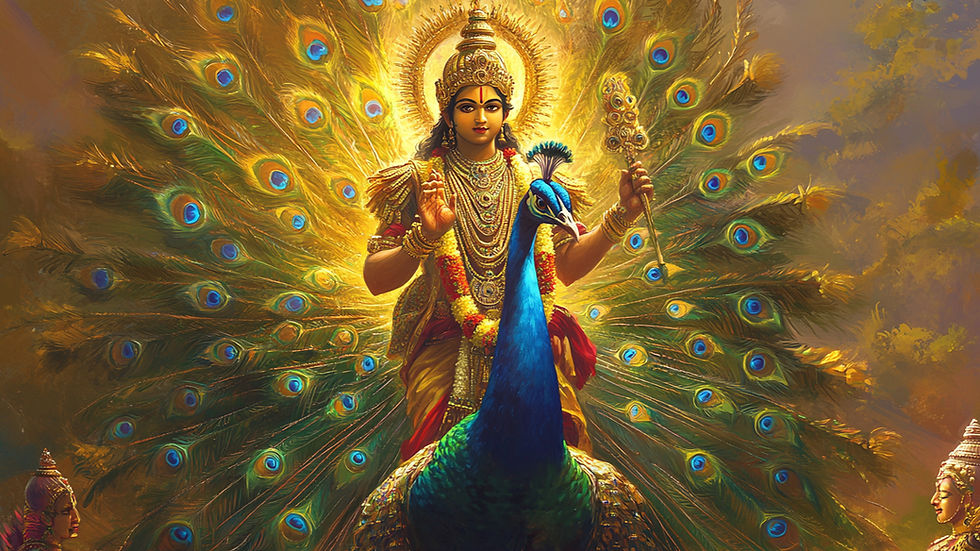
In the vibrant temples of Tamil Nadu, the name of Murugan—also known as Kartikeya, Skanda, Subrahmanya, or Kumar—is chanted with deep devotion. To many, he is seen as a Southern deity. But did you know his worship once stretched from the Himalayas to Cambodia and even into Buddhist traditions?

Skanda: Kartikeya’s Forgotten Legacy in India
Explore Skanda: Kartikeya’s Forgotten Legacy in India. Discover his pan-Indian roots, spiritual symbolism, and cultural significance beyond the South. Let’s rediscover the lost legacy of Skanda, the divine warrior whose presence has shaped the cultural and spiritual identity of Bharat for over 2,000 years.
Kartikeya: Born from Fire, Not a Region
Ancient texts, such as the Yajurveda, Chandogya Upanishad, and Shatapatha Brahmana, refer to Kumar (also known as Kartikeya) as the son of Agni, born of fire. He is not just a symbolic figure but an embodiment of divine power, described as having thrice the might of Agni himself.
The very name “Kumar” originates from Kartikeya and is not a generic title. This proves his roots lie in Vedic Sanskrit literature—not just Tamil folklore.
Skanda in the Ramayana and Classical Sanskrit Literature
In the Ramayana, Sage Vishwamitra narrates the birth and deeds of Kartikeya to Lord Rama and Lakshmana. Inspired by this, Mahakavi Kalidasa composed Kumarasambhavam, one of the most celebrated epics in Sanskrit literature.
This directly connects Skanda’s story to the cultural heart of ancient India, far beyond the southern borders.
Skanda Purana: The Largest Hindu Purana
The Skanda Purana—dedicated entirely to Kartikeya—is the largest of the eighteen Mahapuranas. It documents sacred sites like:

Kedarnath, Badrinath (North)
Puri, Ujjain, Dwarka (Central and West)
Rameswaram, Arunachalam (South)
It also references Ram Janmabhoomi in Ayodhya, highlighting the central role Skanda played in the pan-Indian spiritual landscape.
Murugan’s Tamil Shrines: The Arupadai Veedu
Tamil Nadu is home to the six sacred abodes of Murugan, known as the Arupadai Veedu:
Thiruchendur
Palani
Swamimalai
Thiruthani
Thiruparankundram
Pazhamudircholai
These shrines are powerful centres of devotion, keeping alive the flame of Kartikeya’s worship where it once thrived across the Indian subcontinent.
Kartikeya in Ancient Statues Across India and Asia
Uttar Pradesh (5th–8th century CE)
Gupta-era statues show Kartikeya seated on a peacock, holding a spear (vel).
Nepal (11th–18th century CE)
Numerous statues depict Kumar as a youthful god with his symbolic mount.
Cambodia (6th–10th century CE)
Temples and sculptures depict Skanda in Hindu iconography, demonstrating his influence in Southeast Asia.
Gandhara (Afghanistan–Pakistan, 2nd century CE)
Kartikeya is portrayed as a warrior in Scythian armour, holding his signature spear and rooster flag.
Kashmir (6th century CE)
A statue found here affirms his worship in the Himalayan region.
These archaeological finds across Asia tell a larger story: Kartikeya was never just a regional deity.
Kartikeya as a Bodhisattva in Buddhism
In Mahayana Buddhism, Kartikeya is venerated as Skanda Bodhisattva, a heavenly general and protector of monasteries and Dharma.
In China, he is known as Weituo (often placed at temple gates).
In Japan, he’s worshipped as Idaten.
These versions of Skanda protect Buddhist monks and teachings, showing his absorption into non-Hindu traditions.
Royal Reverence: Gupta Dynasty and Beyond
Kings like Kumargupta and Skandagupta of the Gupta Empire (circa 4th–6th centuries CE) honoured Kartikeya by naming themselves after him. Their coins depict Kartikeya with a spear and peacock, confirming his influence in royal iconography.
Why Did Kartikeya’s Worship Fade in the North?
The reasons are complex: invasions, temple destruction, and socio-political shifts during the medieval period likely led to the decline of his worship outside the South. While temples of other deities were rebuilt, the cult of Kartikeya never saw a complete revival.
Fortunately, Tamil Nadu and parts of Andhra Pradesh preserved his legacy with unmatched devotion.
Reclaiming the Pan-Indian Legacy of Skanda
Kartikeya is not just a Tamil god. He is the god of war, the protector of Dharma, and a pan-Asian spiritual figure. His name lives on in ancient texts, temple walls, Buddhist monasteries, royal coins, and sculpture halls worldwide.
We owe Tamil Nadu our gratitude for preserving his worship, but it is time to recognise Kartikeya as a shared cultural and spiritual heritage of Bharat.
Let’s reclaim this forgotten chapter. Let’s remember Skanda—not just as a local deity, but as a divine force who once unified the land through his valour and sacred presence.
Did You Know?
The word "Vel" (Skanda’s spear) symbolises knowledge cutting through ignorance.
Kartikeya is also called Shanmukha (six-faced), representing six divine attributes or directions.
Further Reading:
Skanda Purana (translated editions)
Kumarasambhavam by Kalidasa
Archaeological reports from the Gupta and Gandhara periods


@
@